Riding a bike offers unparalleled freedom and exhilaration, but when the sun dips below the horizon, or adverse weather rolls in, visibility becomes paramount. A reliable bike light set isn’t just an accessory; it’s an essential safety component, your beacon on the road or trail. For modern cyclists, the convenience and efficiency of a USB rechargeable bike light set have revolutionized how we approach nighttime and low-light riding. At BikeBright Pro, we believe in empowering every rider with the knowledge to choose lighting solutions that offer peace of mind and enhance their cycling experience.
Gone are the days of constantly replacing disposable batteries. Today’s USB bike light sets harness advanced LED technology and long-lasting lithium batteries, delivering brighter, lighter, and more efficient illumination than ever before. This guide dives deep into the world of USB rechargeable bike light sets, helping you navigate the options and choose the perfect setup to keep you safe and seen, no matter where your two wheels take you.
Understanding the Essentials: What Makes a Great USB Bike Light Set?
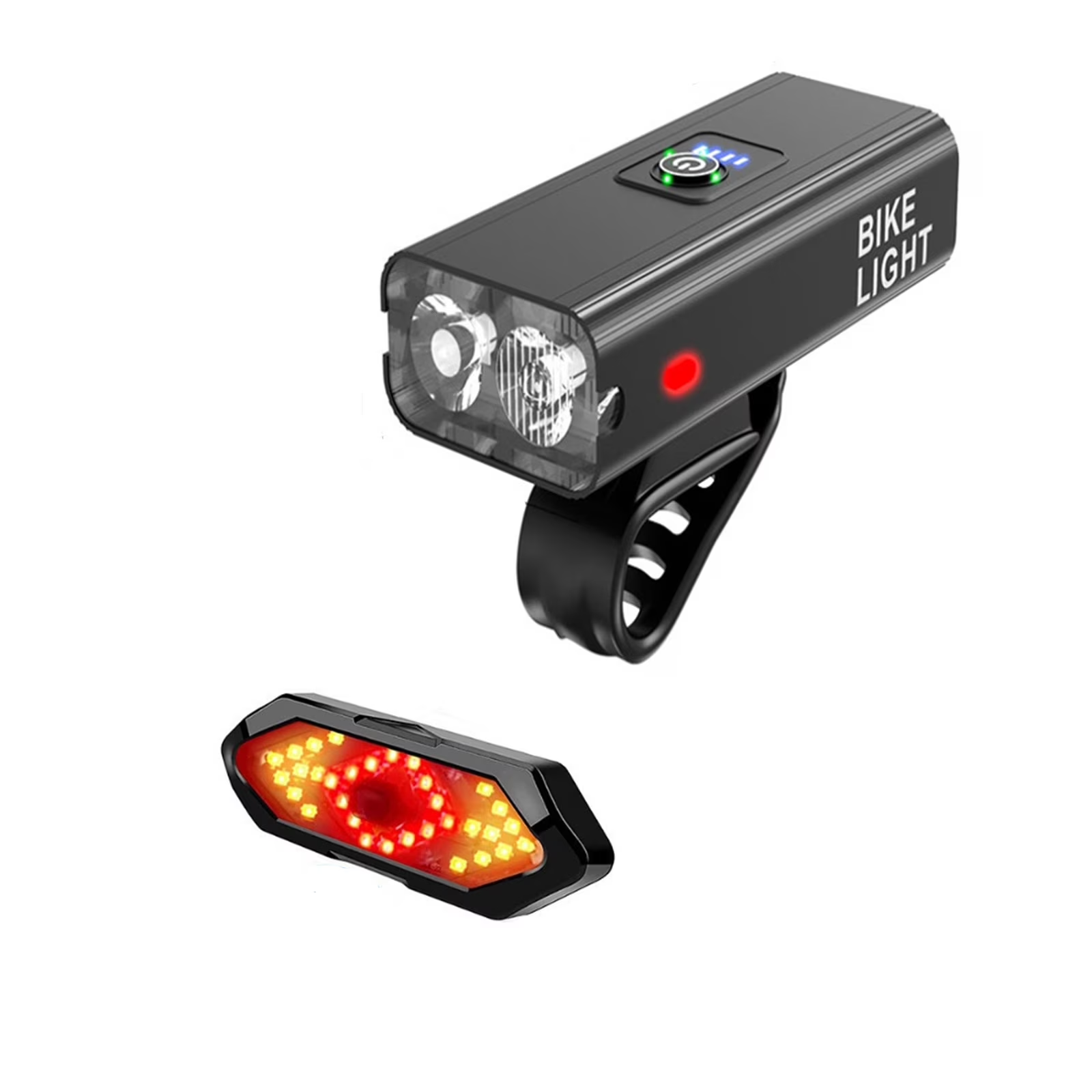
A complete bike light set typically includes both a front headlight and a rear taillight, providing crucial 360-degree visibility. This dual setup is fundamental for ensuring you can see obstacles ahead and that others can see you from all directions. When exploring your options, consider a comprehensive bike light set
|
Our Picks for the Best Bike Light Set in 2026
As an Amazon Associate I earn from qualifying purchases.
|
||
| Num | Product | Action |
|---|---|---|
| 1 | Ascher Ultra Bright USB Rechargeable Bike Light Set, Powerful Bicycle Front Headlight and Back Taillight, 4 Light Modes, Easy to Install for Men Women Kids Road Mountain Cycling Black |

|
| 2 | Bike Lights for Night Riding, USB Rechargeable Bike Lights Front and Back, Waterproof IP65 Bicycle Light, 4+6 Modes Bike Headlight and Tail Light Set,1.5 Hrs Fast Charging, Easy to Install |
|
| 3 | NiteRider Swift 450 + Vmax+ 180 Front & Rear Bike Light Combo 450 Lumen Front & 180 Lumen Rear Lights USB-C Rechargeable Lightweight IP64 12 Total Modes for Bike Safety Commuting Bicycle Night Riding |
|
| 4 | Ascher Ultra Bright USB Rechargeable Bike Light Set, Powerful Bicycle Front Headlight and Back Taillight, 4 Light Modes, Easy to Install for Men Women Kids Road Mountain Cycling Black |
|
| 5 | Victoper Bike Light, High Lumens Super Bright Bicycle Lite, 6+4 Modes USB Rechargeable Bike Headlight & Taillight Set, Waterproof Safety Bike Front & Rearlight for Road, Mountain, Night Riding |
|
| 6 | GearLight Rechargeable Bike Light, Bike Headlight and Tail Light Set, Powerful Front and Back Lights for Night Riding Safety, Night Riding Accessories, White Elephant Stocking Stuffer for Men |
|
| 7 | 1000 Lumens Super Bright Bike Lights for Night Riding, 8+7 Modes Sturdy Aluminum Alloy Bicycle Lights Front and Rear, IP65 Waterproof & Rechargeable Bike Headlight for Bike/Scooter Accessories |
|
| 8 | BLITZU Bike Lights, Super Bright Bicycle USB-C Rechargeable Headlight, Taillight & Bell Set, Waterproof Safety Front & Rear Back light for Night Riding, Easy to Install for Men Women Kids Road Cycling |
|
| 9 | Bike Light Set for Night Riding,Bright Rechargeable Bicycle Headlight Set High Beam Low Beam,USB LED Bicycle Light,Waterproof Bike Headlight and Taillight for Adult Kid Mountain |
|
| 10 | Bike Lights, Rechargeable Bicycle Lights Set Super Bright 8+12 Modes, IPX6 Waterproof Bike Lights for Night Riding/Cycling Safety, Front and Back Taillight Reflectors, 58 Hrs Long Battery Life |
|
The Power of Front Lights: Seeing Your Path Clearly
Front lights are your primary source for illuminating the road or trail ahead. Their power is measured in lumens, a crucial factor determined by your riding environment:
- Urban Commuting: For well-lit city streets, a front light with 200 to 500 lumens is generally sufficient to be seen by motorists and to pick out immediate obstacles.
- Unlit Roads and Pathways: If your route involves dark roads without streetlights, you’ll want a minimum of 600 lumens to adequately light your way. Many riders prefer 800-1000 lumens for greater confidence.
- Mountain Biking (MTB): For aggressive trail riding in complete darkness, 1000 lumens is a good starting point, with many opting for 1500-2500 lumens or even higher for high-speed technical descents. Combining a handlebar-mounted floodlight with a helmet-mounted spot beam offers optimal coverage.
Beyond raw brightness, the beam pattern plays a significant role. A spot beam focuses light over a longer distance, ideal for fast road riding or seeing further down a trail when mounted on a helmet. A flood beam, conversely, illuminates a wider area, perfect for lower-speed riding, country roads, or as a handlebar light to complement a helmet-mounted spot beam. Many modern lights offer a blend of both, providing versatility.
The Vital Role of Rear Lights: Ensuring You’re Seen
Rear lights are arguably your most critical safety device, making you visible to approaching traffic. While they typically have lower lumen outputs than front lights, their impact on safety is immense.
- Visibility for All Conditions: For road cycling and commuting, a rear light in the 50 to 150 lumen range is effective. Brighter rear lights (e.g., 200+ lumens) with powerful flash modes are increasingly popular for daytime visibility, helping you stand out even in bright sunlight.
- Mounting Options: Rear lights commonly attach to your seat post, but helmet or backpack mounts are also excellent choices, especially as a supplementary light. Look for models offering 220-degree visibility to maximize your presence to cross-traffic.
Key Factors to Consider When Choosing Your Best USB Bike Light Set
Selecting the right bike light set means balancing your riding needs with the features available. Here’s what to look for:
How Bright is Bright Enough? Understanding Lumens for Your Ride
“Choosing the right lumen output is like selecting the right tool for the job,” advises Dr. Elena Rodriguez, Lead Innovations Engineer at BikeBright Pro. “You wouldn’t use a hammer for a screw. Similarly, a 200-lumen light won’t cut it on a pitch-black trail, just as a 2000-lumen light might be overkill and potentially dazzling on a well-lit city street.” Tailor your lumens to your specific riding environment to maximize safety and battery efficiency.
Battery Life and Run Time: Powering Your Adventures
USB rechargeable lights offer fantastic convenience, but battery life is paramount. Manufacturers typically list run times for various modes (max output, medium, low, and flash).
- Maximize Run Time: While the highest setting offers the most light, it also drains the battery fastest. Using lower steady modes or flashing modes significantly extends battery life, often for many hours. Some lights feature “eco” or “walk” modes that provide minimal light for emergency situations, lasting for dozens of hours.
- Higher Output, Longer Life (in practice): Often, choosing a light with a higher maximum lumen output than you strictly need allows you to comfortably use it on medium or low settings, providing ample light while substantially increasing the time between charges.
Charging Convenience: USB-C vs. Micro-USB
Most modern USB bike light sets feature either Micro-USB or the newer, more versatile USB-C charging ports. USB-C offers faster charging and a reversible connector, making it more user-friendly and increasingly common. Some innovative lights even integrate the USB connector directly into the light body, eliminating the need for extra cables.
Light Modes: Adaptability for Every Scenario
A good bike light set provides multiple modes:
- Steady Modes: Low, medium, and high settings for constant illumination.
- Flashing Modes: Various pulse, strobe, or random flash patterns designed to grab attention. Daytime flash modes are often designed to be particularly bright and distinct, making you visible even in broad daylight.
- Smart Modes: Some advanced lights incorporate sensors that automatically adjust brightness based on ambient light or your speed.
Waterproofing and Durability: Ready for Anything
Cycling often means encountering unexpected weather. Look for lights with an International Protection (IP) rating. An IPX4 rating protects against splashing, while IPX7 means the light can withstand immersion in water for up to 30 minutes. A robust, durable construction ensures your lights can handle the rigors of daily use and the occasional bump.
Mounting Systems: Secure and Versatile
Bike lights typically use either flexible silicone strap mounts or more rigid plastic/metal clamp mounts.
- Strap Mounts: Quick, easy to attach/remove, and suitable for smaller lights, but can sometimes shift on rough terrain.
- Clamp Mounts: More secure, ideal for larger, heavier lights, but can be more involved to install and remove.
- Quick-Release: A highly desirable feature for both types, allowing you to easily remove lights for charging or to prevent theft.
Weight: A Consideration for Helmet Mounting
While negligible for handlebar or seat post lights, weight becomes important for helmet-mounted lights. A lighter light will be more comfortable and less distracting, especially during extended rides or on technical trails.
Installation and Maintenance: Keeping Your Lights Shining Bright
Proper installation and simple maintenance ensure your USB bike light set performs optimally and lasts longer.
Easy Installation
Most USB bike light sets are designed for tool-free installation.
- Front Light: Securely attach to your handlebar (or helmet, if applicable), ensuring the beam is angled slightly downwards to illuminate the road without dazzling oncoming traffic.
- Rear Light: Mount on your seat post for maximum rearward visibility. Ensure it’s not obstructed by saddlebags or clothing.
Charging Best Practices
- Regular Charging: For daily commuters, integrate charging into your routine.
- Cool Down Before Charging: If your light has been running on a high setting for a long time, allow it to cool for about an hour before charging to prolong battery life.
- Avoid Over-Discharging: Try not to completely drain the battery frequently, as this can reduce its overall lifespan.
Cleaning and Storage
Wipe your lights clean with a damp cloth after rides, especially in wet or muddy conditions. Store them in a cool, dry place, ideally at a partial charge (around 50-70%) if storing for extended periods, to maintain battery health.
Tips for Effective and Safe Cycling with Your USB Bike Light Set
Becoming a more visible and confident cyclist is straightforward with the right lighting strategy:
- Daytime Running Lights (DRLs): Always use a bright flashing rear light, and ideally a front light, even during the day. DRLs significantly increase your visibility to drivers, especially at intersections.
- Layer Your Lighting: For serious night riding, especially mountain biking, consider running multiple front lights (e.g., one on the handlebars, one on your helmet) to eliminate shadows and provide comprehensive illumination.
- Be Mindful of Others: While high lumens are great for seeing, be aware of your beam’s angle to avoid blinding pedestrians or oncoming cyclists and drivers. Some lights have anti-glare cut-offs for this purpose.
Embracing Innovation: New Technologies in Bike Lighting
The world of bike lighting is constantly evolving, with new technologies enhancing safety and convenience.
- Smart Lights: These lights use accelerometers and ambient light sensors to adapt. They can flash brighter when braking or at intersections, and automatically adjust output based on light conditions. Many can be controlled via smartphone apps or handlebar remotes for seamless mode changes.
- Radar Lights: Pioneered by Garmin and now offered by other brands like Wahoo, radar taillights detect vehicles approaching from behind and alert you via a connected cycling computer, smartphone, or smartwatch. Some even integrate cameras to record incidents. This technology adds an extra layer of awareness, particularly on open roads.
- USB-C Adoption: The shift towards USB-C as a universal charging standard means faster, more convenient charging across all your devices.
- Advanced Optics: Improved lens and reflector designs ensure that the lumens produced are effectively distributed, creating more useful and less dazzling beam patterns.
The BikeBright Pro Advantage: Benefits of a Quality USB Bike Light Set
Investing in a high-quality USB bike light set from BikeBright Pro is an investment in your safety and enjoyment of cycling. The benefits are clear:
- Enhanced Safety: Significantly increases your visibility to others and your ability to see hazards.
- Unrivaled Convenience: USB charging means no more hunting for disposable batteries; simply plug in and power up.
- Versatility for Any Ride: From daily commutes to epic night rides, a well-chosen set adapts to various conditions.
- Cost-Effectiveness & Environmental Friendliness: Rechargeable batteries save you money over time and reduce waste.
- Confidence on Two Wheels: Knowing you have reliable illumination empowers you to ride more confidently, extending your riding hours and exploring new routes.
Light Up Your Ride with BikeBright Pro
At BikeBright Pro, we are dedicated to illuminating your cycling journey with the Best Usb Bike Light Sets on the market. We understand that every pedal stroke is a moment to be cherished, and ensuring your safety is at the core of our mission. The evolution of USB rechargeable bike lights has made high-performance illumination accessible and convenient for everyone.
Whether you’re navigating urban jungles, conquering winding trails, or simply enjoying a leisurely evening ride, a quality bike light set is your indispensable companion. Explore our range, empower your ride with superior visibility, and experience the confidence that comes from knowing you’re fully equipped. Ride bright, ride safe, with BikeBright Pro.